Greater Kruger


ABOUT
Greater Kruger
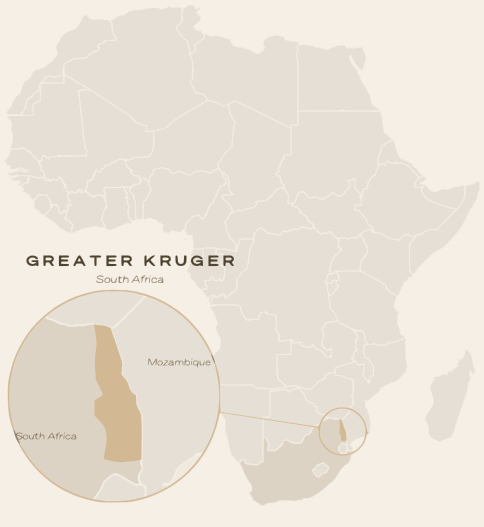
Greater Kruger connects South Africa’s Kruger National Park with neighbouring private reserves, including Sabi Sand, Timbavati and Klaserie. Open boundaries allow wildlife to move freely across this extensive conservation area. A Greater Kruger safari combines rewarding Big Five viewing with experienced guiding, from following tracks on a morning game drive to noticing the smaller details on foot.
Why choose a Greater Kruger safari?


6 Nights
starting from
$ 11,500 pp
Yes. Greater Kruger is one of South Africa’s premier safari regions, known for exceptional Big Five game viewing, private reserves and up-close wildlife encounters. You can experience classic safari drives, walking safaris and some of the country’s most exclusive lodges.
The Greater Kruger is a connected wilderness area made up of private nature reserves along the western boundary of Kruger National Park. Many of these reserves dropped their fences decades ago, allowing wildlife to move freely between the private reserves and the national park.
The Greater Kruger includes well-known private reserves such as Klaserie, Timbavati, Balule, Manyeleti and the Sabi Sand. These areas are only accessible to privately booked guests and guides, giving you a more exclusive and intimate safari experience.
Yes. Greater Kruger is one of the best places in South Africa to see the Big Five: lion, leopard, elephant, rhino and buffalo. The region is especially strong for close wildlife encounters, expert tracking and world-class game viewing in private reserves.
Yes. Greater Kruger is excellent for walking safaris, including the chance to track wildlife on foot with experienced guides. It gives you a more immersive way to understand the bush, from animal tracks and bird calls to the smaller details you may miss from a vehicle.
Choose Greater Kruger if you want a more private, guided, and exclusive safari experience. The private reserves offer fewer vehicles, flexible game drives, luxury lodges, walking options, and excellent wildlife viewing while still being part of the wider Kruger ecosystem.