

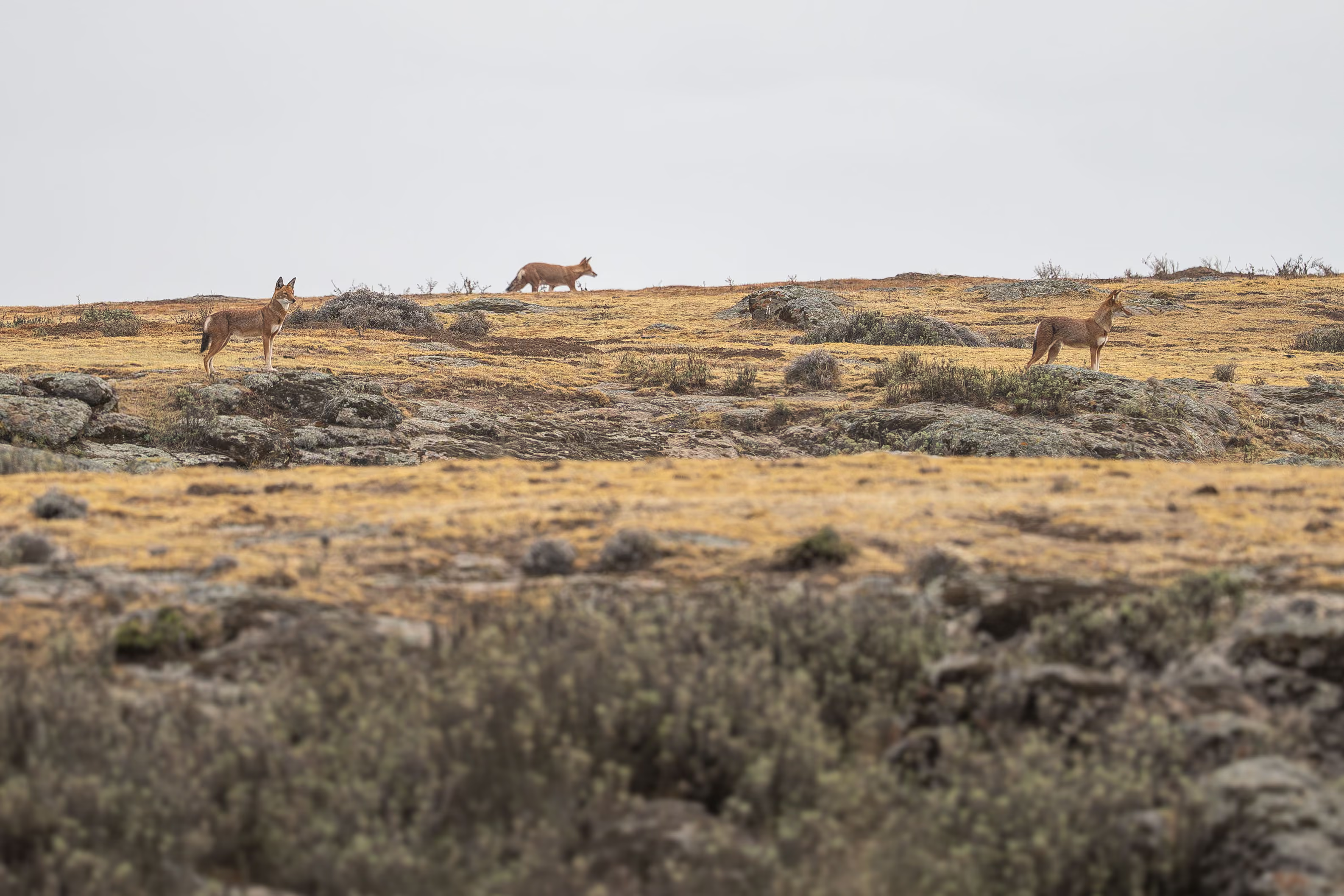
In the highlands of Ethiopia, there is a predator so rare that few people in the world will ever encounter it. This is because it is specially adapted for a particularly unique high altitude grassland that only exists in a handful of places in Ethiopia. The Ethiopian wolf doesn’t occur below 3,000 meters. This, combined with a highly specialised diet of rodents, leaves very few places on Earth where they can survive. In recent decades, their population has reached a critically low number, making them Africa’s most endangered carnivore and also the world’s most endangered canine species.
There are only an estimated 500 Ethiopian wolves left on the planet.
I’ll let that sink in for a second. 500 remaining individuals. That would be like if the entire planet’s human population could fit on one Airbus transatlantic flight.
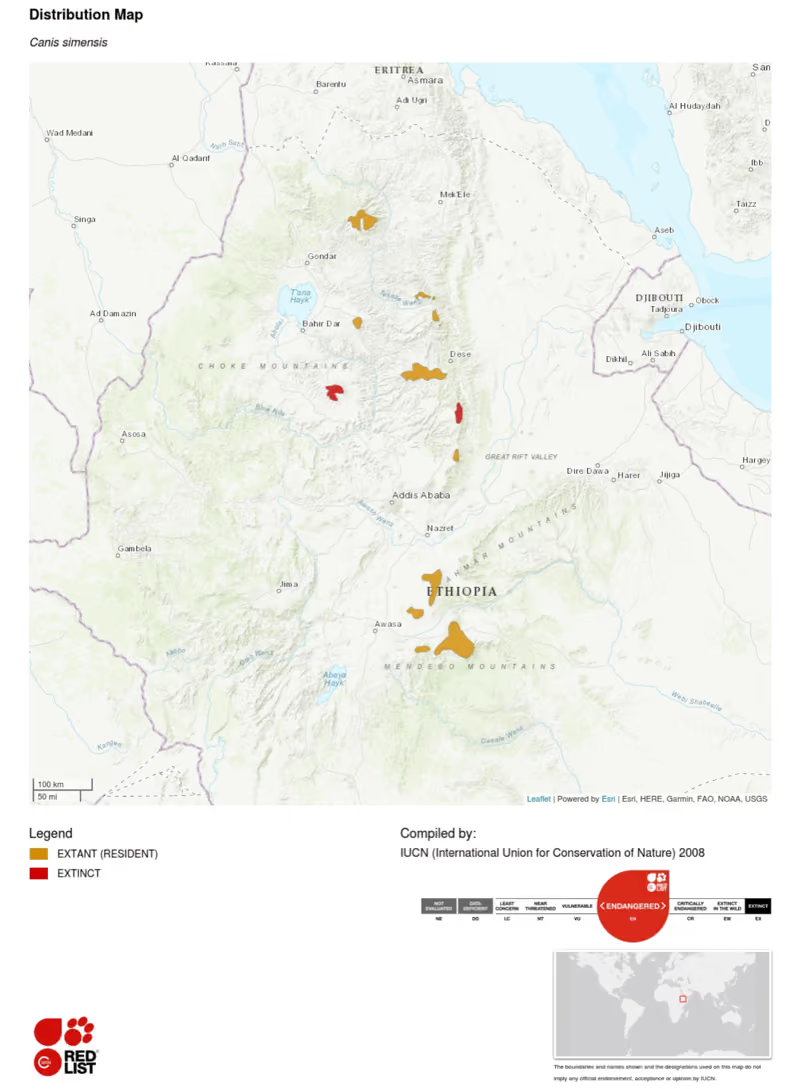
Habitat loss from human encroachment, along with disease, primarily canine distemper and rabies, are the greatest threats to their survival. The Bale Mountains hold the largest remaining population, with roughly 250 individuals. Beyond that, the rest persist in tiny, fragmented populations scattered across the highlands of Ethiopia.
The largest remaining population, around 250 individuals, lives in the Bale Mountains. Beyond that, the species persists in small, fragmented groups scattered across Ethiopia’s highlands. Their range is alarmingly limited (see map), and without continued conservation, the devastating reality is that in a century or less, this fascinating creature may only exist in photos.
The Ethiopian wolf, although fox-like in appearance, is actually most closely related to the gray wolf. Their ancestors dispersed from Europe south into Africa tens of thousands of years ago, and evolved to be specialists in the Afroalpine zone. They evolved special adaptations like increased oxygen efficiency to thrive in these high altitudes where few other species live. Their adaptation to this harsh ecosystem is what makes them both fascinating and vulnerable. Unlike their distant wolf cousins who hunt large mammals in packs, the Ethiopian wolf is a solitary hunter whose main prey is rodents, the Giant mole rat and the grass rat, the most abundant residents of the highlands.
Getting There and Accommodation
A short one hour commercial flight took us from Addis Ababa to Robe where Land Cruisers were waiting to take us up further into the mountains. On the outskirts of town and even into the National Park itself, the evidence of encroachment was clear. Communities are farming and grazing livestock even within park boundaries, placing pressure on the wolves’ limited habitat.
Deeper into the park, the landscape was vast, barren and remote. Rolling hills are broken up by rocky outcrops and valleys. Low vegetation makes it possible to scan great distances. The longer you looked, the more movement on the ground you could see. Dozens of rodents scattering! Fodder for the many bird of prey species we saw, and of course for wolves too.. En route, we also checked off more than a few endemic bird species for the bird list!
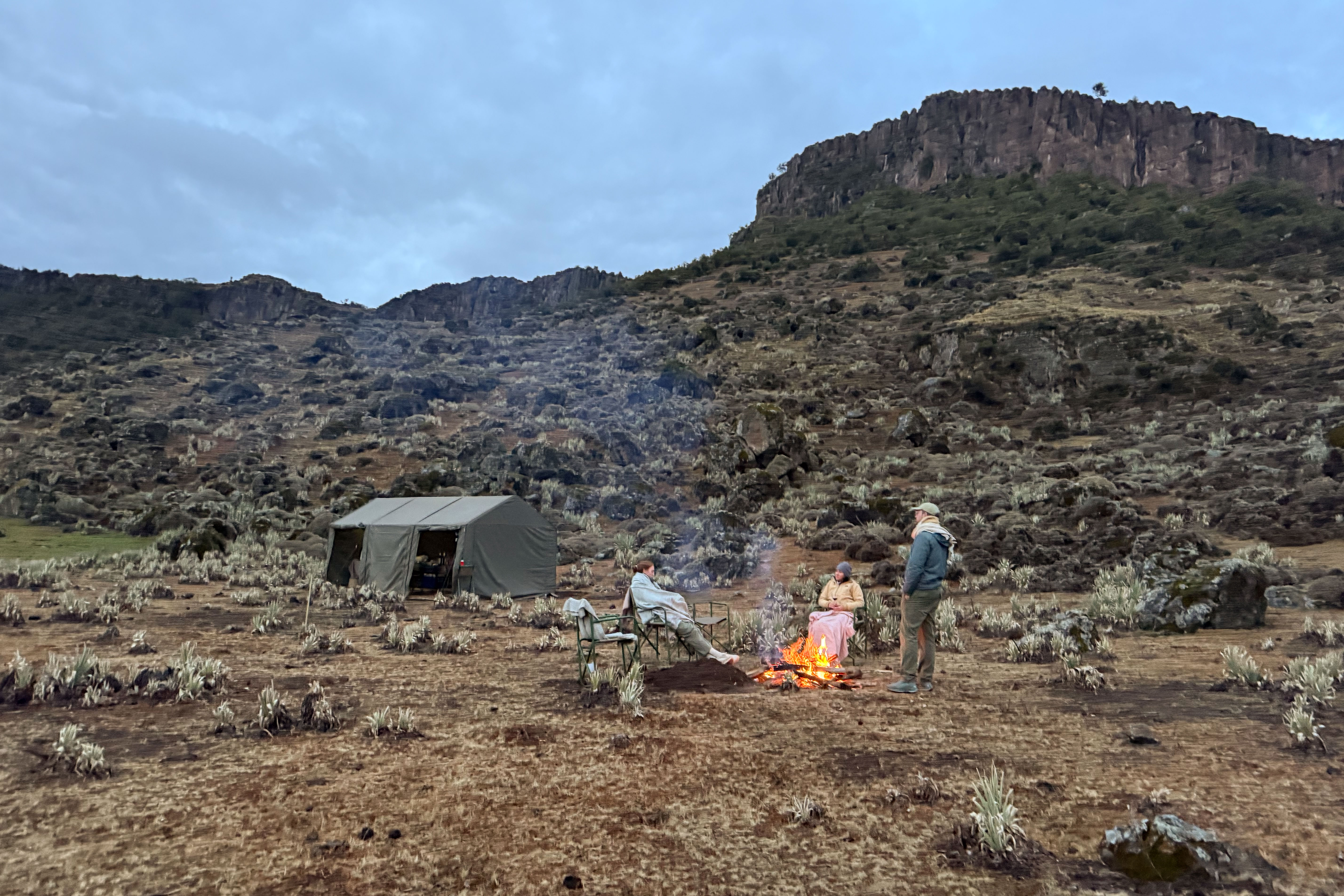
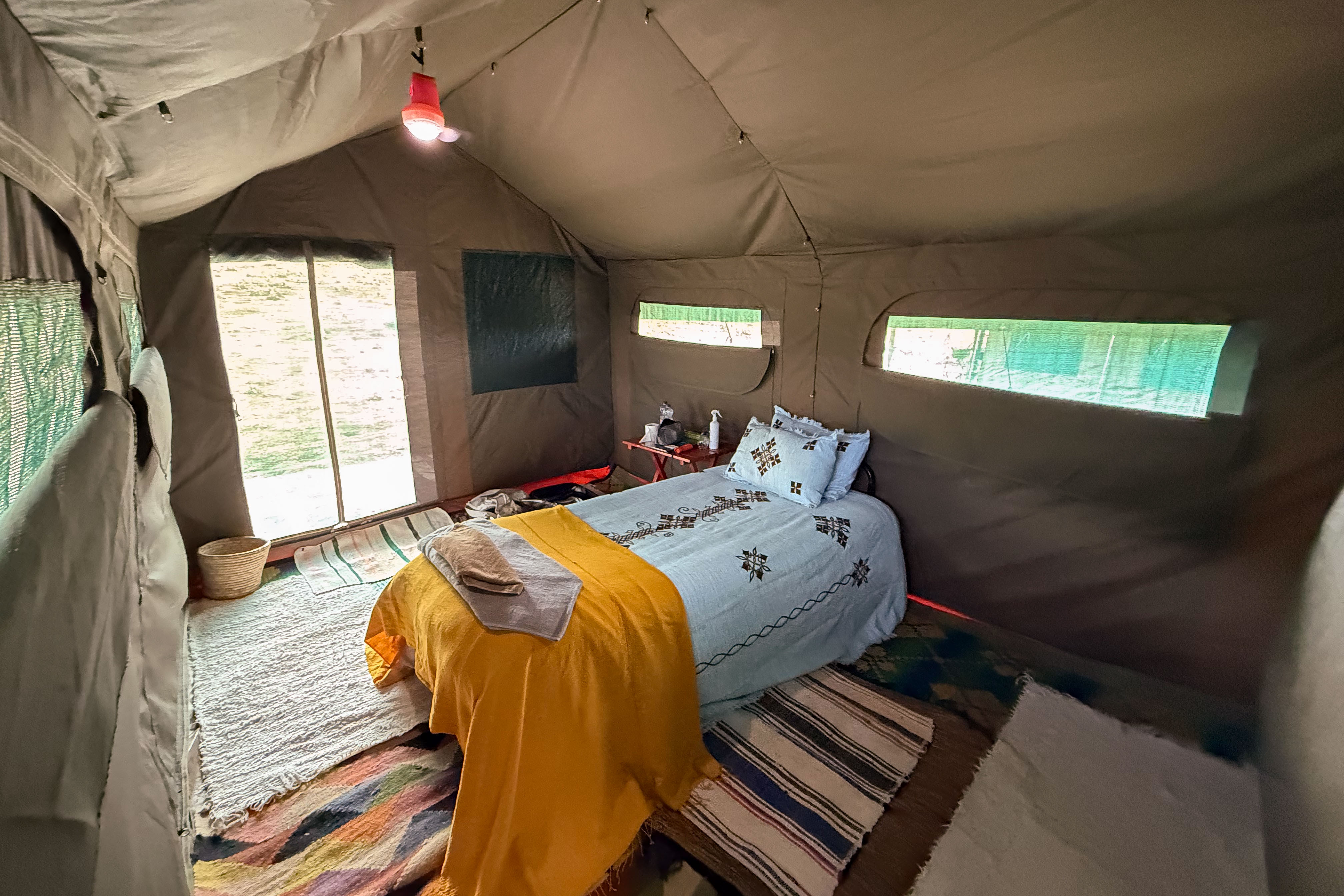
We stayed three nights at the Wild Expeditions Mobile Camp. I would have liked to stay a whole week! Camp was based at a staggering 3500m (11,500 feet), and the effects of altitude were made clear with any notable exertion. This is the only accommodation in the Web Valley, which is prime wolf territory. The camp facilities are basic, but the quality of the meals was great, and you can’t beat waking up on the doorstep of prime wolf habitat. Most other accommodation is outside the park, meaning long drives in and out. We had best success in finding the wolves in the early morning, so being out there from sunrise is an advantage. Nights were frosty, but the excitement of the search kept spirits high.
Looking for the Wolves
We began at sunrise, scanning the valleys from our vehicles. We were successful in finding wolves every morning. Depending on the situation, we either stayed in the vehicle or approached on foot. There is no off-road driving allowed in Bale National Park.
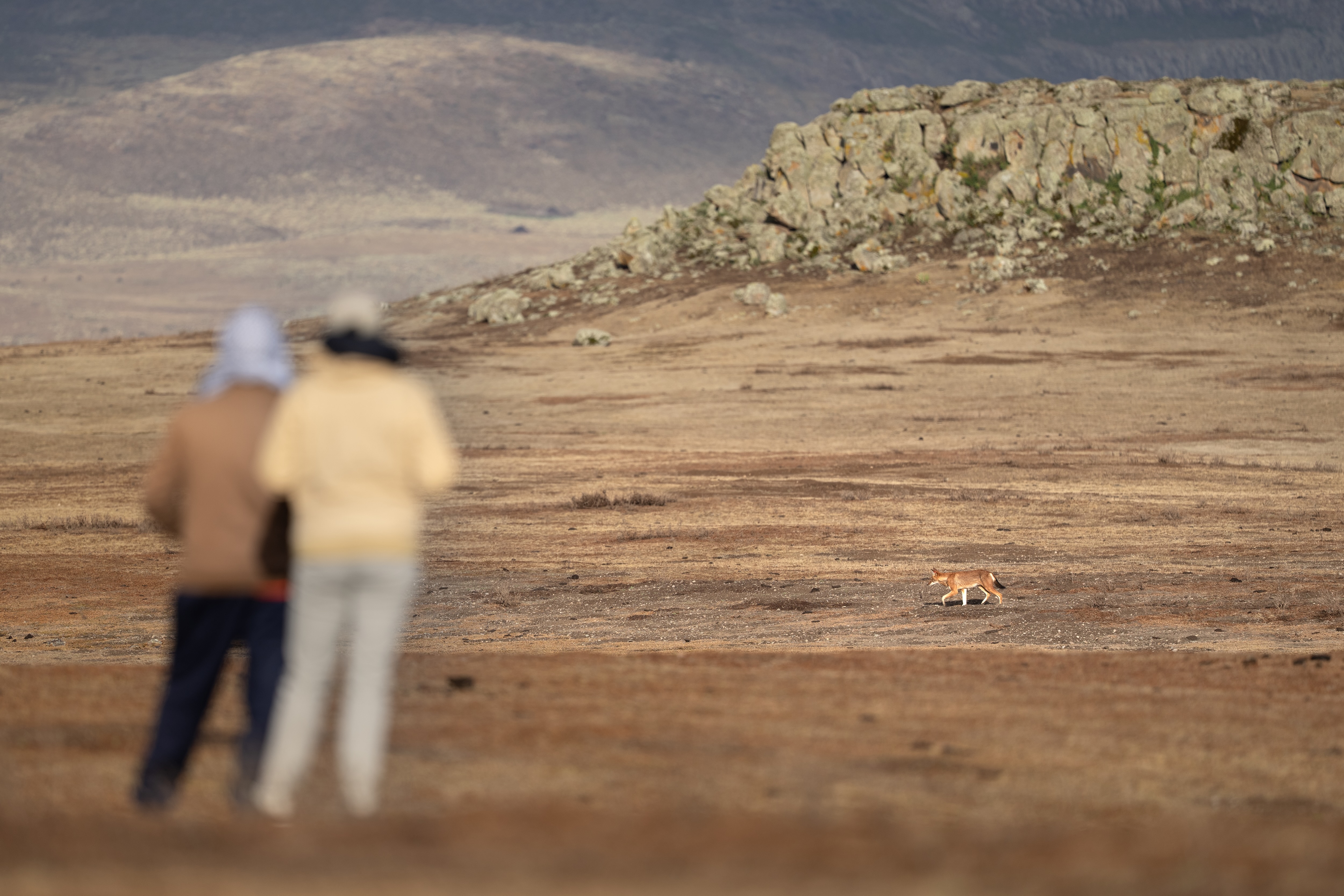
The Ethiopian wolf is a pack animal that is a solitary hunter. Early mornings you may find individuals together briefly before they split up to hunt for the day alone. Each wolf will have its own individual tolerance for people and vehicles, but for the most part, the wolves we encountered in the Web Valley were not habituated and preferred to keep a good distance from us. Our sightings ranged from 50-300+ meters away. So a good pair of binoculars is key. (Note: Ethiopia requires a permit to bring binoculars into the country.)
A sighting could last 10 minutes or 2 hours. The landscape is open so you can watch them for a long time, although they are very fast so keeping up with them on foot is challenging, particularly at altitude. Their pace slows when they reach an area for hunting. Then their approach is to watch rodents run into a hole and they either dig them up or they wait and pounce.
One morning, we stayed with a male wolf for about 2 hours. Over the course of time, he became more relaxed in our presence and we ultimately got about 75 meters to him. We watched him make multiple kills and even stash a Giant mole rat, perhaps to bring to the den later on.
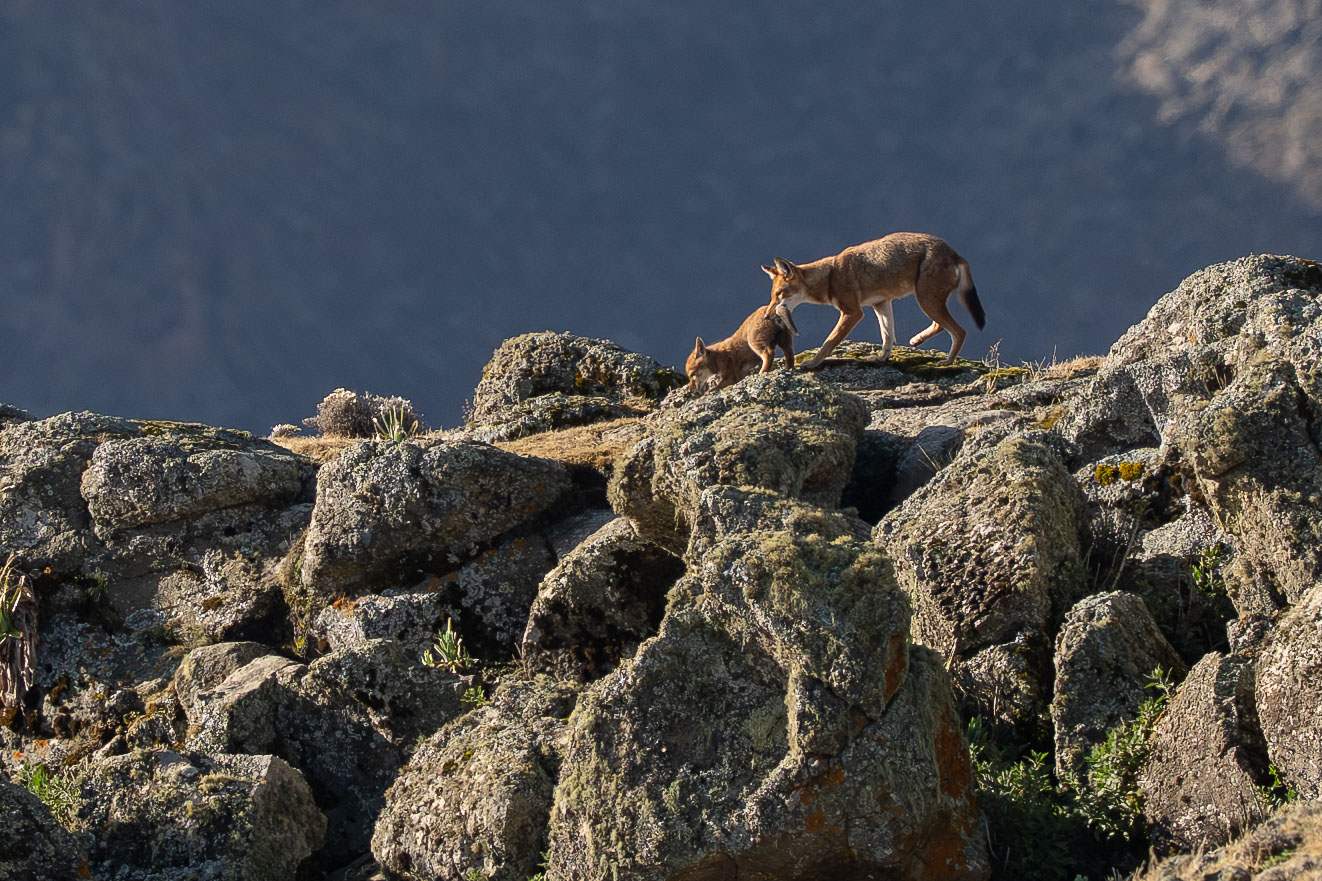
The highlight of our trip was seeing an Ethiopian Wolf puppy. We had been watching 3 adults from a distance when one of the adults ran over to a rocky area, and a tiny puppy emerged. We watched from about 300 meters away as the puppy played with all 3 adults. Puppies are best seen during the months of March and April when they are a few months old before they have fully left the den. The den sites are monitored by the wolf research teams and may not be closely approached by tourists for their own protection.
Tips for your Ethiopian wolf expedition
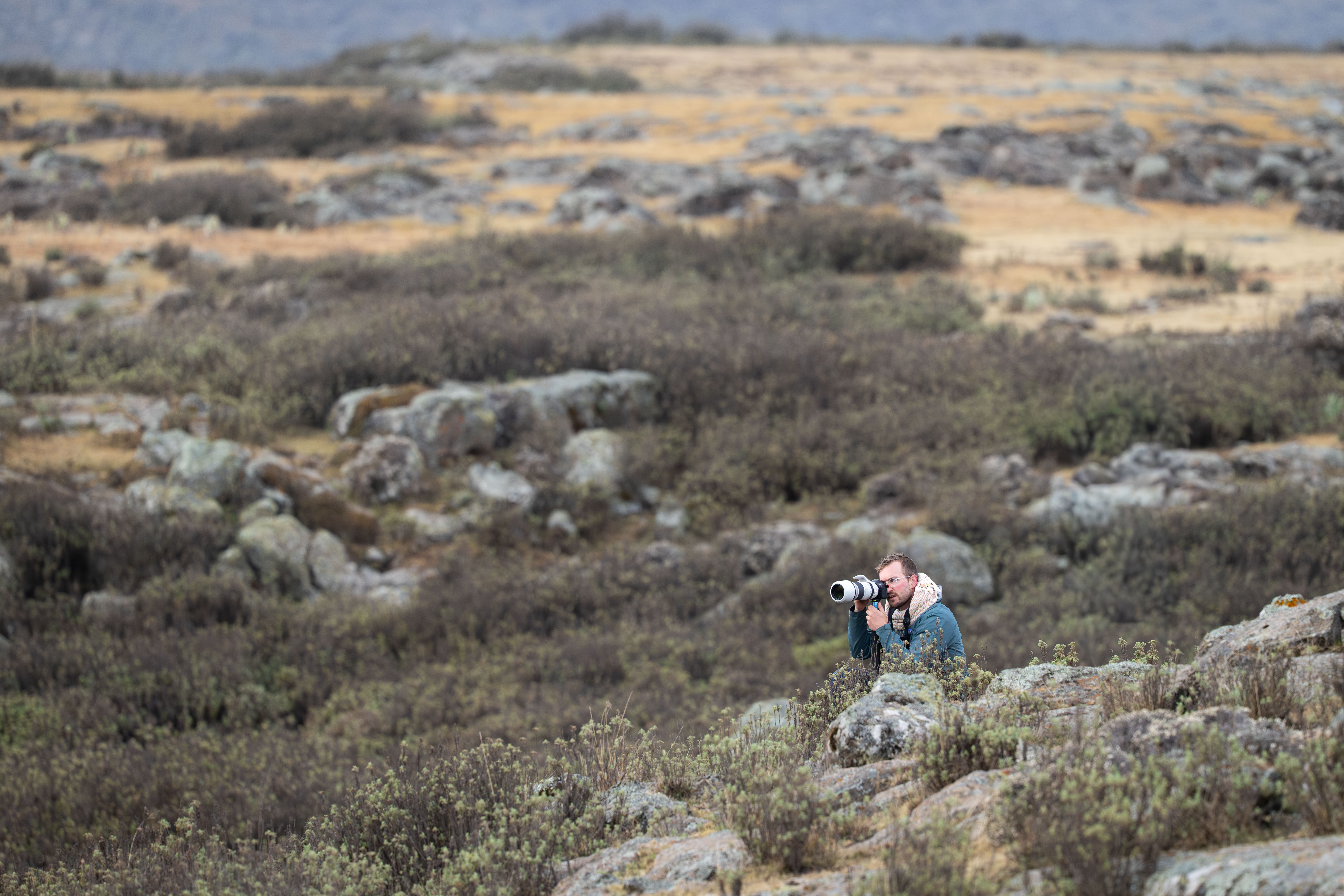
- Photographic Gear: While a close sighting is possible, most of our sightings of the wolves were at least 50 meters away. For a lens I’d recommend as much reach as possible. 400–600mm range ideally with a 1.4 or 2x teleconverter. Wide angle lens for landscapes. A tripod is also useful while on foot. Wolves in the Sanetti Platteau have a reputation for being more habituated, so sightings there may be closer.
- Binoculars: Essential. Remember to get a permit in Ethiopia and prepare to show it multiple times during airport security.
- High altitude: Wolf viewing in Bale occurs between 3500-4000m, which is a high altitude/low oxygen environment for our bodies and you’ll likely feel the effects. To prevent altitude sickness, it’s recommended to stay hydrated, move slowly, limit alcohol consumption. I’d recommend bringing electrolytes for extra hydration and ibuprofen for altitude headaches.
- Cold mornings and evenings: Temperatures can hit freezing or lower. I’d recommend thermals, beanie, gloves, and a warm jacket. If you are very cold sensitive like me, hand warmers or battery-heated vests make a huge difference in comfort.
- Rain: Even in the dry season, rain is common. We had heavy rain every afternoon on our expedition in March. Bring rain gear (jacket, pants, and/or poncho).
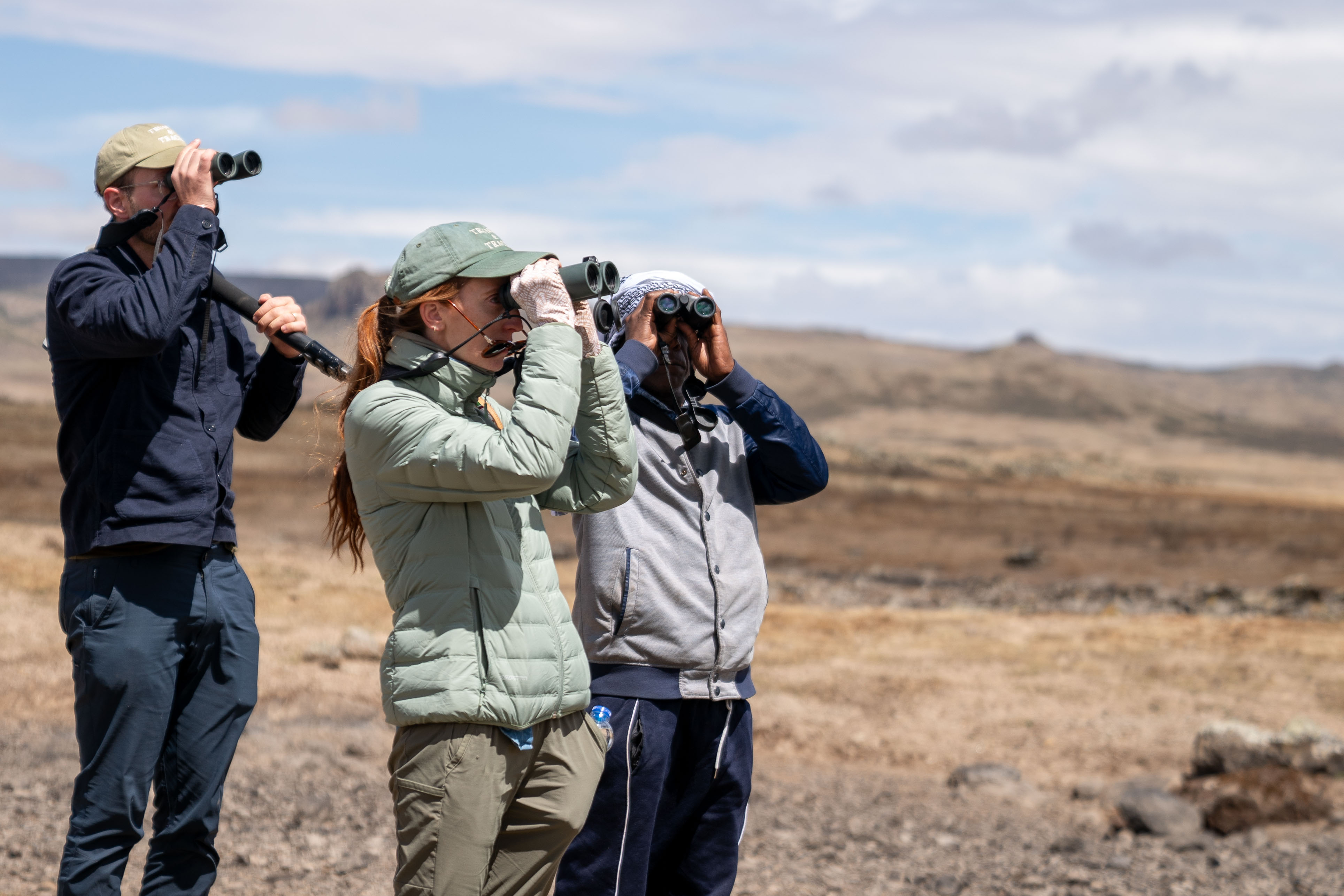
So, was the journey to the roof of Africa worth it? Absolutely.
This was a true adventure and one of the most unique wildlife trips I have ever done. This expedition can easily be combined with other fascinating destinations across Ethiopia, from exploring the ancient cultures of the Omo Valley and Lalibela to viewing the Geladas and Walia ibex in the Simien Mountains.
If this adventure is whispering your name, just say the word and we’ll get you there!
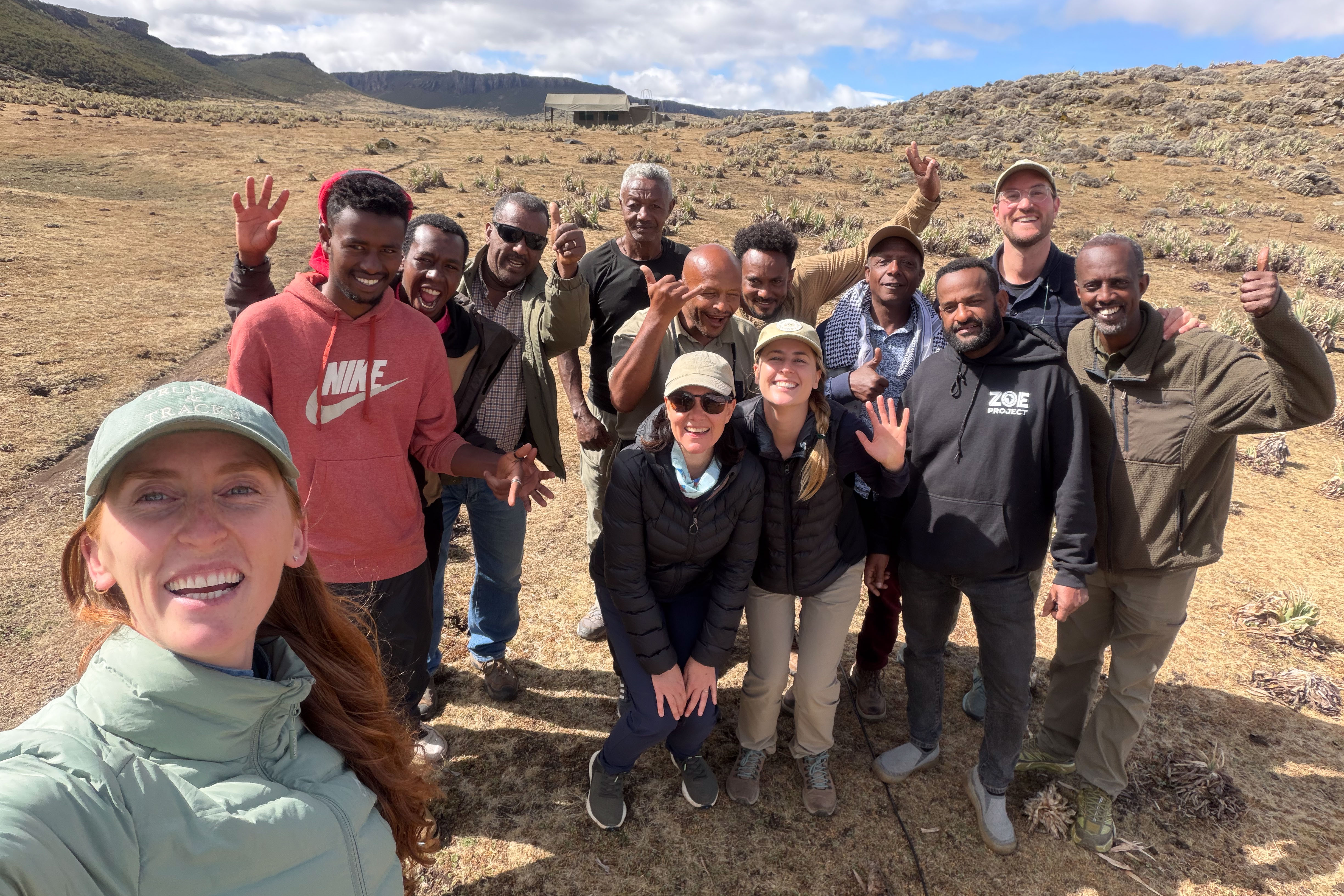
At BHS, every expedition is shaped around the traveller, from the pace of the journey to the depth of experience you’re looking for, and the moments that will feel most meaningful along the way.
Get in touch with our team and let us start planning your Ethiopian wolf expedition.