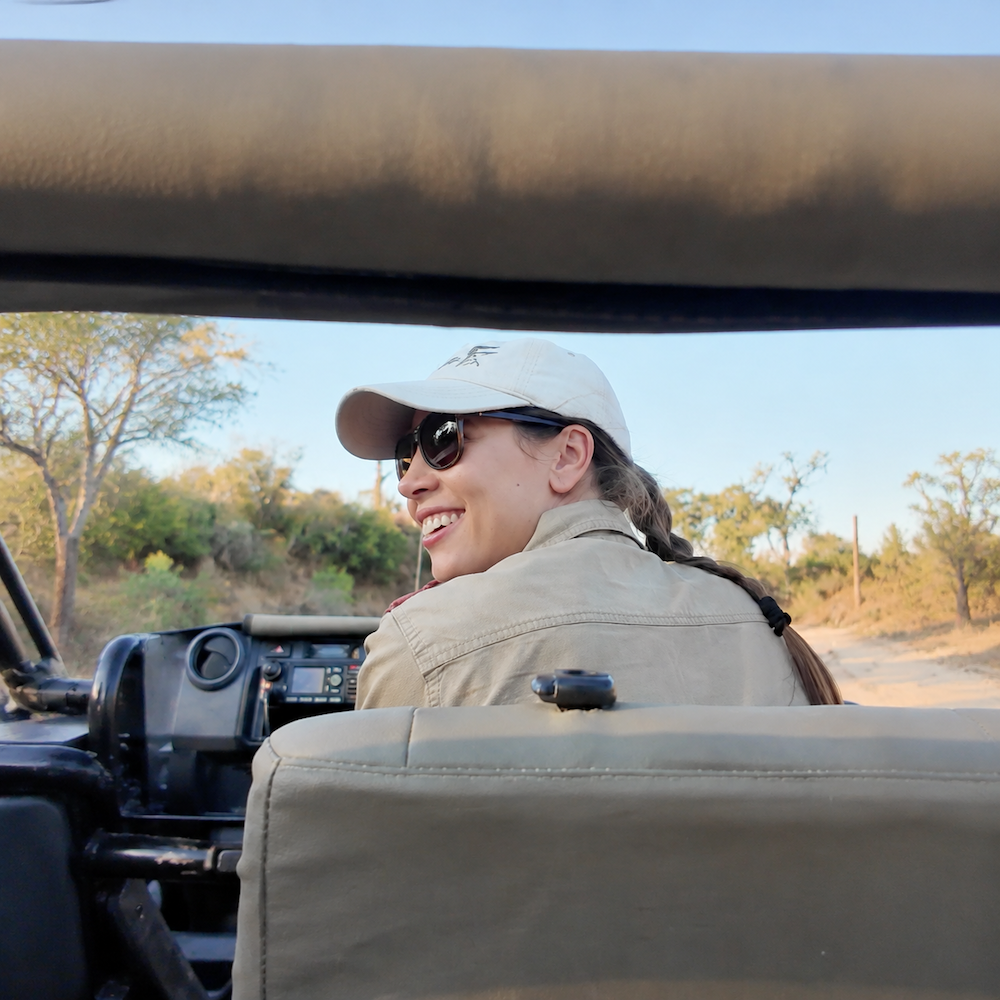
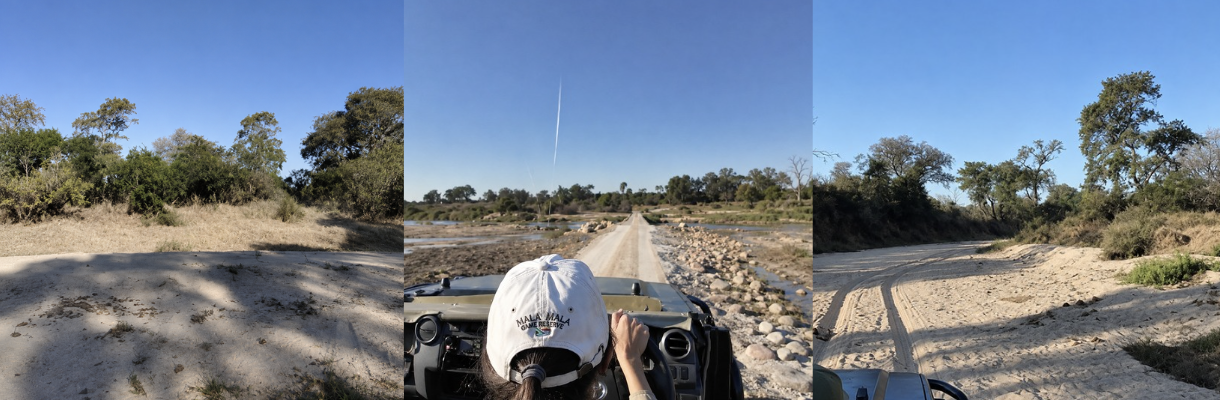
Speaker 1: Sun setting on the on the Sand River. This is Sundowner Sessions. And uh we it's been amazing with you, Steff, so really grateful for sharing this place with us. Uh tell us what we're going to do next.
Steff McWilliam: So, we're slowly going to make our way down the banks of the Sand River as the sun is setting. Beautiful reflection of the the sunset off the Sand River. Slowly make our way past a area where a young male leopard was spotted this morning roaming the banks of the Sand River in search of prey. The two Kambula lionesses have been found downriver. Um they've spent the afternoon just taking it chilled, having a bit of a relax session away from the cubs.
And uh there's been a quite interesting dynamics with the cubs lately. It's two lionesses, each with four cubs. Um for the last two days, there's actually only been six cubs viewed. One of the guides on the way back to camp last night in the dark caught visual of a single cub just sitting on a a dead tree close to the river. So, we're quite keen to go and follow up there and see if they've managed to locate the the missing two cubs and feed them and, you know, have all the cubs Speaker 1: All right, this is a good one. We are on drive at Mala Mala. It's all about the wildlife with SteffMcWilliam, and she just stopped us and told us, "Can I tell you about my most insane sighting?" And that's my favorite question in the world. So here we go. We are in the...
Steff McWilliam: Mluwati River.
Steff McWilliam: Hi, guys. So, we're sitting in the Mluwati River at the moment, and just chatting to Brett and Jo about an incredibly special sighting that happened here about three years ago. We spent the morning following a pack of wild dogs that were interested in hunting, and they were moving quite steadily along the banks of the Mluwati River looking for any potential prey species.
All of a sudden, they flushed a family of klipspringers that went racing along the banks of the river. The dogs obviously took chase, and immediately, the second we saw they were chasing klipspringers, I think all of us were like, "This is it. Like, they're going to get all three of them." They're quite a small antelope. They're very capable on rocks. They were also pretty quick, but obviously, the wild dogs are one of the most successful terrestrial predators in Africa, and very often are capable of running down these smaller antelopes over a longer distance.
So, we were speeding along the Mluwati River bed as the dogs were racing along the river banks following the klipspringers, and we followed them past a multitude of different rocky outcrops. We continued, continued, came around a corner, and all of a sudden, one of the klipspringers found the most perfect little rocky outcrop you could have imagined.
Within the space of about 20 or 30 seconds, all three of the klipspringers managed to find their way onto this rocky outcrop. It's not like one went there and the other two followed; they arrived in their own time from their own directions. Okay, one arrived from the eastern side, one arrived from the southern side, and then they all just gathered in this little rocky outcrop.
The wild dogs completely surrounded them. Some of them tried to climb the bank; they got onto the top of the rocks. They were trying to get down to the klipspringers that had found the most perfect little ledge on the side of this beautiful granite koppie, completely out of reach of any of the dogs.
The most fascinating thing about the sighting was not necessarily the visual; it was what was going on in the minds of these animals, okay? They displayed what was, without a doubt, predator-specific behavior. Okay, there's no way they would have done that if it was a leopard. The leopard would have just smashed them straight off the edge of the rock and tackled them down into the river. They wouldn't have done it with a lion. It's possible they may have done it with a hyena.
More so than that, it was fascinating to see the dynamics of just how important a good understanding of an animal's territory is to their survival. So, they knew exactly that this is the rock. I wouldn't say it's going too far saying that they'd learned from generations and generations and generations, and you'll probably find that klipspringers living in this area 400, 500 years ago probably employed the same tactics.
So, it was the adults that arrived because they're monogamous; the male and female usually stay together for life, and they had a beautiful little baby male who they were leading in this survival escape.
And as they got onto the rock, they just perched completely still. You could see the baby was incredibly stressed; they were surrounded by 21 African wild dogs. And it was amazing to see the baby actively looking at the mother and the father for guidance. If that baby was alone, I wouldn't have put it past it to have panicked and actually jumped off of that ledge. That little animal's body would have been flooded with adrenaline. Everything inside it physiologically would have been screaming for it to run. But it was watching very carefully what the parents were doing and followed suit.
The sighting lasted about 45 minutes. And another really interesting aspect of the sighting and the animal behavior was... it was a pack of 21. I think there might have been about 10 sub-adult wild dogs, so 10 teenager wild dogs. The adult wild dogs arrived, they saw the klipspringers up on the rock, and they were like, "Nope." They just carried on. They realized that they weren't going to get them. It was the 10 teenager dogs that could not let this go. They were right there, they thought they could get them, you know.
It was so much more than a sighting. It was such an amazing insight into the behavior of these animals: predator-specific behavior, intricate understanding of their territories and just how important that is for their survival, and then of course, the lessons that the adults inadvertently teach to the youngsters through their own behavior.
It was probably one of the most stressful sightings ever. I think everyone felt absolutely ill because we knew that if the dogs got even one, the other two klipspringers were going to have to watch it be eaten below them.
And very, very happy to say... I think as safari guides, we often try not to be too invested in either side, in the predator or the prey. We want nature to unfold naturally and whoever deserves to win, deserves to win. Either an animal deserves to escape with its life, or an animal deserves a meal. But I have to say I was heavily, heavily invested in the klipspringers.
Speaker 2: That's insane. I think I saw footage of that.
Speaker 3: I also feel like I saw footage of that.
Speaker 2: It's on the interweb, definitely on the Mala Mala YouTube, I guess.
Steff McWilliam: That was it?
Speaker 2: It's insane.
Steff McWilliam: Yeah, I'll show you guys the rock where that happened shortly. It all started here on the banks, and then...
Speaker 2: I do want to see that rock.
Steff McWilliam: ...I'll be able to show you guys the distance at which these klipspringers ran...
Speaker 2: That's amazing.
Steff McWilliam: ...before they found this one particular rock, which there's no doubt about it, they actually seeked that rock out, in my mind anyway.
Speaker 2: Super cool. Thank you for that.
Steff McWilliam: Thanks for sharing. What a nice story.
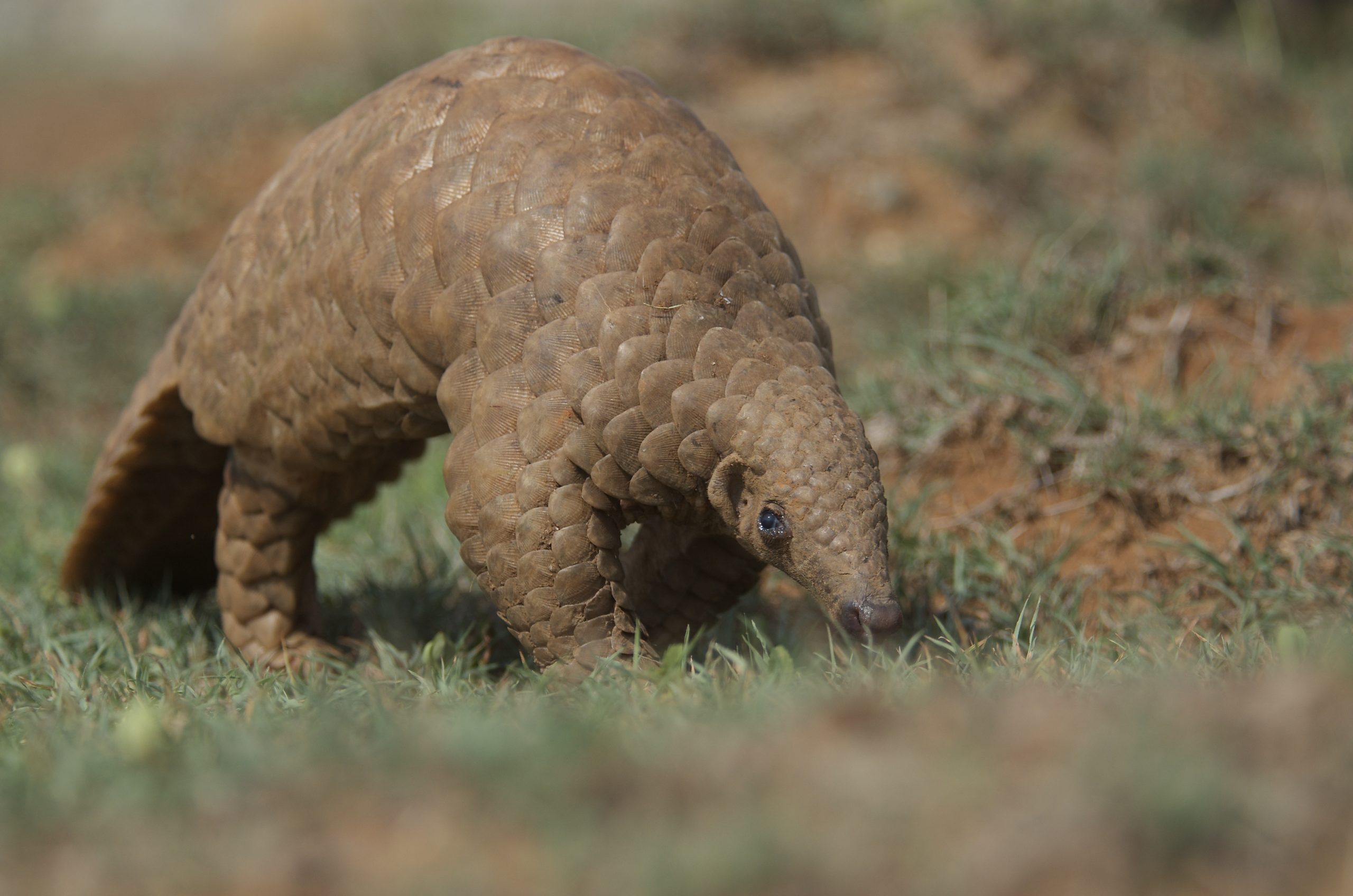
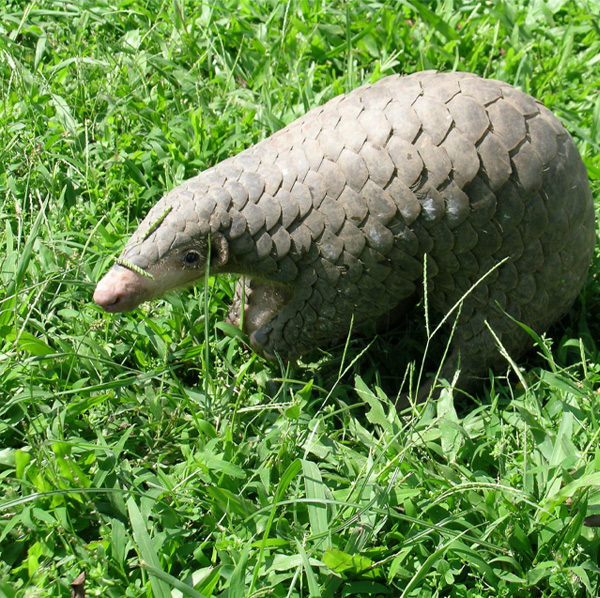
Speaker 3: Tell me... you were just telling us just now, tell us... tell me about how endangered this Sunda pangolin is that I didn't know about, so you were on a conservation project in Vietnam. One cool fact about that creature?
Steff McWilliam: It's difficult to pick just one cool fact! [laughter] There are... they're one of the most critically endangered pangolin species on the planet. They've got the largest distribution range of the Asiatic pangolins, of which there's the Sunda pangolin, the Philippine pangolin, the Indian pangolin, and some more recently newly described Indo-Burmese pangolins, in addition to another newly described species.
Quite different to the pangolins we get in this area in that they're actually arboreal, so they're very, very good little tree climbers. There's some very close similarities with the Temminck's pangolin or the ground pangolin that we get in this area in terms of their diet, their foraging habits. But they are, of all the pangolin species, the most intercepted, the most highly trafficked, purely because of their distribution range in Asia. So, they'll be in Indonesia, they'll be in Malaysia, Vietnam, Laos, Cambodia. Quite a bit smaller than our species, but incredible to watch. They're very, very good little tree climbers.
Speaker 3: Amazing. What's your Mala Mala call sign?
Steff McWilliam: 48.
Speaker 3: I always wanted one of those. [laughter]
Steff McWilliam: Mala Mala call sign is 48.
Speaker 3: I like that. Your favorite animal?
Steff McWilliam: Favorite animal is probably an otter.
Speaker 3: Nice. Okay.
Steff McWilliam: I'm a little bit biased. I managed to... was very privileged enough to have raised two otters while working at the Johannesburg Wildlife Veterinary Hospital. So, being able to spend time with them and see how their little minds work... very dexterous, you know, higher mammal intelligence, problem-solving capabilities, tool users... naughty, but fascinating little species, for sure.
Speaker 3: So cool. Cape clawless otter?
Steff McWilliam: Yes.
Speaker 3: You don't get to see them much. Wow. Two more questions. Is it "Kloof" or "Klooff"?
Steff McWilliam: [laughter] It's a loaded question! For any of the South Africans, they'll know that's a very loaded question. Now you're making me panic! We all know historically it was "Klooff," but for 99.9% of the residents in Kloof, I'm going to be wildly unpopular because of this, but let's go with "Kloof."
Speaker 3: Okay, last one to put you on the spot. Sometimes do this... can you give us an animal sound or a joke?
Steff McWilliam: Animal sound or a joke? Oof.
Speaker 3: Or another story, it's also fine.
Steff McWilliam: Okay, baby rhino sound.
Speaker 3: Oh, yes!
Steff McWilliam: You ready? Okay, let's hope my voice doesn't break.
(Steph imitates a baby rhino's high-pitched squealing sound)
Steff McWilliam: I think there'll probably be a lot of viewers, a lot of listeners that are like, "That can't be right! That can't be right!"
Speaker 3: 10 out of 10! Yeah, that's amazing!
Steff McWilliam: All right, thanks for backing me on that one, I appreciate it.
Speaker 2: 100% right. I have one more question for you: if you could only take one thing on safari, what would it be?
Steff McWilliam: That's an unexpectedly tough question. Honestly, I'm pretty down to go out there with not much.
Speaker 2: Okay, that's awesome.
Steff McWilliam: That might be the answer: nothing.
Speaker 2: Perfect. The shoes on your feet?
Steff McWilliam: That's it. Sometimes maybe not even, depending on the substrate.
Speaker 3: Barefoot in the sand. Okay, Steff , thank you so much, really appreciate it. We're here at Mala Mala for sundowner sessions, and it's a privilege, so really appreciate that.
Steff McWilliam: Awesome. Thanks, guys.
Speaker 2: Thanks, Steff