

At Selati Game Reserve, the veterinary team had one more thing to do before a rhino mother and her calf woke up. They gently moved the calf alongside its mum. Of everything our own Chloë and Jeff Hyer saw that day, it was this small act of care that stayed with Chloë. The reason for trimming the rhinos’ horns was clear enough before she arrived: it gives poachers less incentive to target them. What she could only appreciate by being there was how much thought went into looking after these two animals, right down to where they’d find each other when they opened their eyes.
There are certain safari experiences you look forward to. And then there are those you approach with a little apprehension. For BHS’s Chloë, joining a rhino dehorning operation at Selati Game Reserve in South Africa fell slightly into the second category. She had witnessed a dehorning many years before, and the memory had stayed with her. Seeing an animal of that size sedated, watching its body tremble under the effects of the drugs, and knowing the intervention was necessary because of the threat of poaching had been deeply emotional.
So when Chloë and Jeff joined the team at Selati to assist with the dehorning of a rhino mother and her calf, she thought she knew what to expect. She was wrong. And, as it turned out, rather pleased about it.
Behind the Scenes of Rhino Conservation at Selati Game Reserve
From the sound of the helicopter overhead to the vehicles navigating the reserve’s rugged tracks, there’s nothing particularly gentle about the setting of a rhino dehorning operation. It’s a major logistical exercise involving pilots, veterinarians, wildlife managers, researchers and conservation personnel, all working within a relatively short window to minimise stress on the animals.
But what struck Chloë wasn’t the intensity of the operation. It was how calmly everyone handled it.
“The first time I witnessed a dehorning, I found it really emotional. I was expecting to feel quite shaken again. But this was completely different. It was so calm, so practised. Nothing felt frantic or chaotic.”
Years of experience were evident in the coordination between the helicopter pilot, veterinary team and Selati’s ground crew. Even when circumstances required adjustments, the response was measured and unhurried.
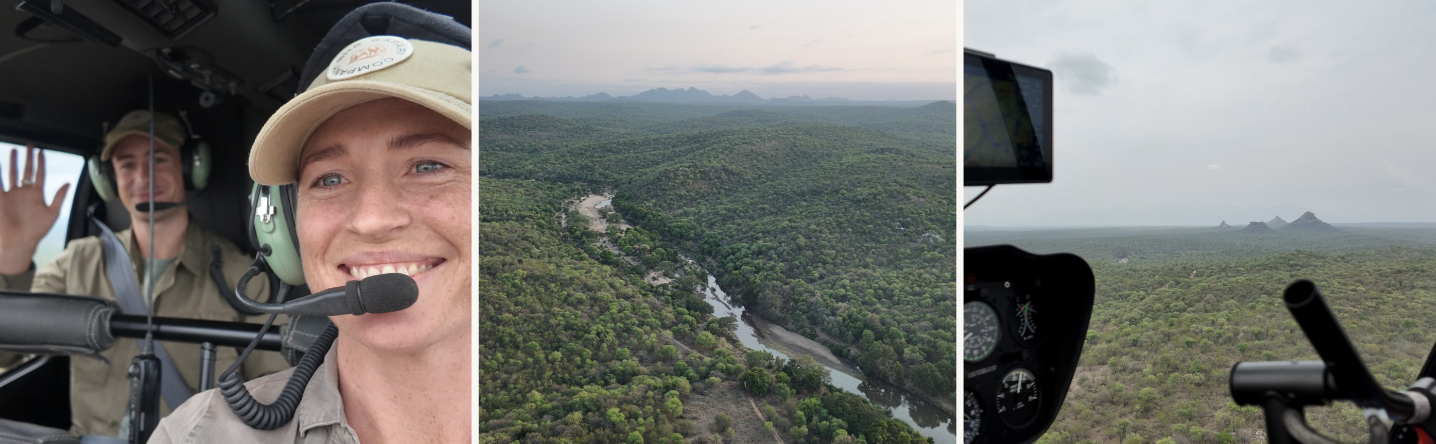
At the centre of the operation was Dr. Ben Muller of Wildscapes, supported by his veterinary assistant, alongside helicopter pilot Jana Meyer of Hope for Wildlife Helicopter Services and Selati’s wildlife management team.
For Chloë, watching these specialists work together was remarkable.
“It’s an incredibly intense thing to witness. You’ve got the helicopter, these enormous animals, and so many people involved. But the ease with which the team adapted to everything was amazing. You could see how much experience they had.”
And there was something else that made an even greater impression.
The Compassion Behind the Conservation
It’s easy to focus on the mechanics of rhino dehorning: the helicopter, the veterinary equipment, the removal of the horn. What stayed with these two was the care shown to the animals throughout.
Dr. Muller’s approach was quiet, considered and, importantly, compassionate. One decision in particular stood out.
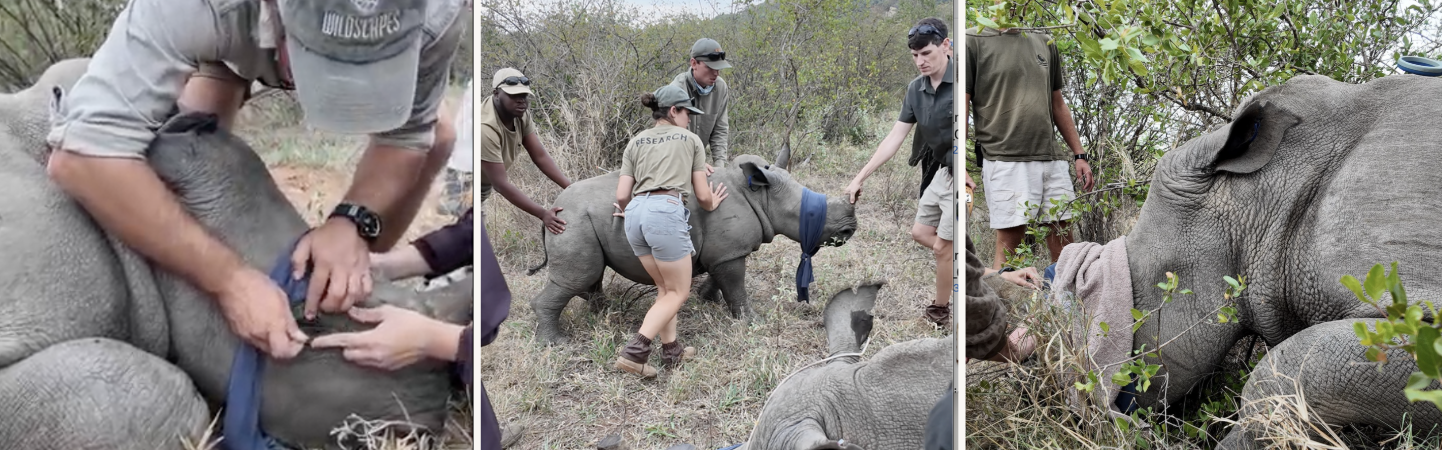
The team had planned to carry out several procedures on the mother and calf, including identification work. But when it came to ear-notching the young rhino, Dr. Muller advised against it. He was concerned about the additional pain and prolonged discomfort it could cause the calf. Instead, the team proceeded with microchipping for identification.
It was a relatively small decision in the context of a much larger operation, but for Chloë, it said everything about the people involved.
“I’m not a scientist or a conservationist. I came into this as a human being watching something that can be quite confronting. What made such a difference was seeing that these weren’t just highly skilled professionals. They genuinely cared about the animals.”
Even the equipment contributed to the atmosphere. An electric saw was used for the dehorning, making the procedure noticeably quieter than Chloë remembered from her previous experience.There was no unnecessary theatre. No sense of people trying to impress the observers. Just a team doing difficult, important work with enormous respect for the animals in their care.
More Than Removing a Rhino’s Horn
While dehorning was the most visible part of the operation, it was only one element of the conservation work taking place that day.
At Selati, the team carried out several procedures:
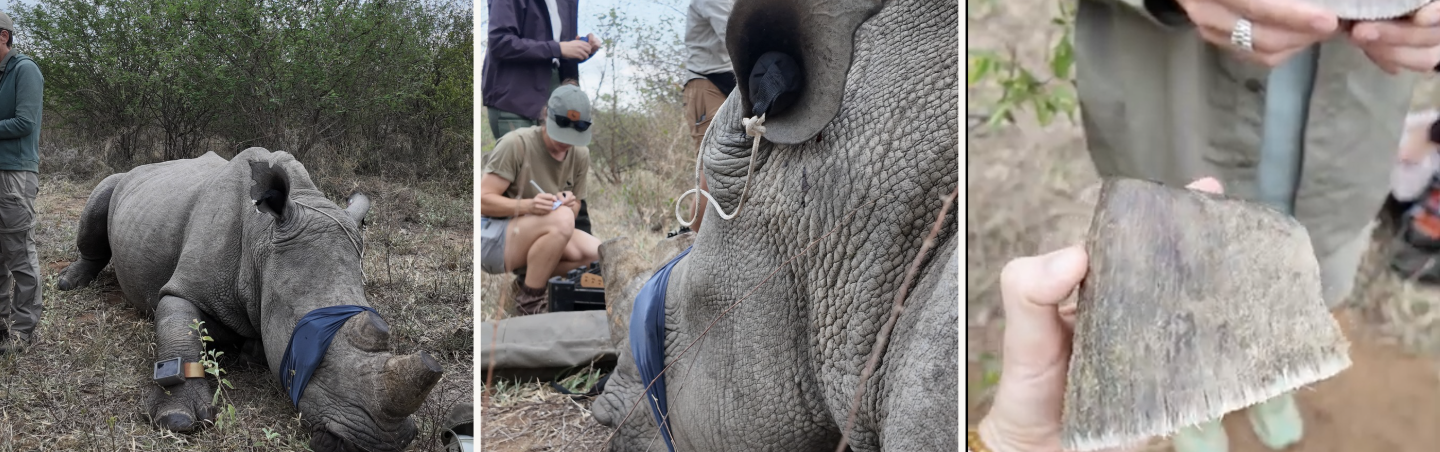
- Rhino dehorning: Both the mother and calf had their horns shortened as a measure intended to reduce their attractiveness to poachers.
- Microchipping: The calf was microchipped to assist with future identification.
- Tracking collar replacement: The mother’s tracking ankle collar was replaced, allowing researchers to continue monitoring her movements.
- Biological sampling: Government officials collected and recorded blood samples to support official identification and conservation records.
Each procedure served a different purpose, but together they contributed to a broader strategy for protecting and monitoring the reserve’s rhino population.
And that’s an important distinction.
Rhino Dehorning Is Not a Standalone Solution to Poaching
Rhino horns can regrow, animals require ongoing monitoring, and removing the horn does not eliminate the threat entirely. At Selati, dehorning forms part of a wider conservation approach involving anti-poaching security, wildlife surveillance, scientific research and long-term ecological monitoring.
For Chloë, speaking to the reserve’s researchers and wildlife managers helped put the experience into perspective.
“It was really interesting to understand everything else they’re doing. They’re not just dehorning the rhinos and leaving it at that. There’s constant monitoring and so much work happening behind the scenes.”
The helicopter might be what catches your attention, but much of the conservation effort happens long after it has landed.
The Moment That Made It All Worthwhile
Of everything Chloë witnessed that day, one moment stood above the rest. As the veterinary work drew to a close, the team carefully positioned the mother and calf alongside each other, preparing them to recover together. Chloë, Jeff, and two other observers stood with Dr. Muller as the reversal medication was administered. Then they moved back into the surrounding vegetation to watch.
The mother began to recover. The calf followed. And within moments, the two were back together, moving off side by side.
“We were lucky enough to stand with Ben when they gave the reversal drugs. Then we watched through the bush as the mother and baby woke up, came straight together, and walked off. That was really special.”
After the noise of the helicopter, the activity of the ground crew, and the intensity of the procedures, it was a wonderfully simple ending. A mother and her calf, back on their feet and back together.
Why BHS Chose to Get Involved
For Brett Horley Safaris, conservation isn’t simply something to discuss over sundowners. It’s something we believe deserves meaningful support. For this operation, BHS and Jeff Hyer jointly sponsored the helicopter pilot’s time, helping make the aerial component of the dehorning possible.
Chloë and Jeff also attended the operation, gaining firsthand insight into the work being carried out by Selati’s conservation teams. It was an opportunity to understand the realities of wildlife protection beyond what guests ordinarily see on safari. And to meet the people who dedicate their working lives to it. Conservation can be complicated. Dehorning, in particular, raises difficult questions about the lengths we have to go to protect an animal from human threats. It’s not something that should ever be treated as entertainment. But witnessing the professionalism, research, and genuine compassion behind an operation like this can change how you understand the work.
As Chloë discovered, there’s a considerable difference between knowing that rhinos are being protected and seeing what that protection actually involves.

Can Safari Guests Take Part in Rhino Conservation Experiences?
Yes. Through BHS, guests may have the opportunity to support and, where appropriate, observe conservation operations such as rhino dehorning in South Africa.
These aren’t conventional safari activities, and they aren’t available on demand. They depend on the needs of the reserve, veterinary schedules, conservation priorities, and the suitability of guest participation. The welfare of the animals always comes first.
Where opportunities are available, BHS can help coordinate meaningful conservation experiences through its network of trusted wildlife professionals and conservation partners. For travellers interested in understanding the work that goes into protecting Africa’s wildlife, it offers an entirely different perspective on safari. One that stays with you long after you’ve returned home.
Because sometimes the most memorable wildlife encounter isn’t about what you see. It’s about what you help protect.
Interested in a Conservation-Focused Safari?
From traditional game drives to opportunities to support frontline wildlife conservation, we can help you experience a different side of Africa.