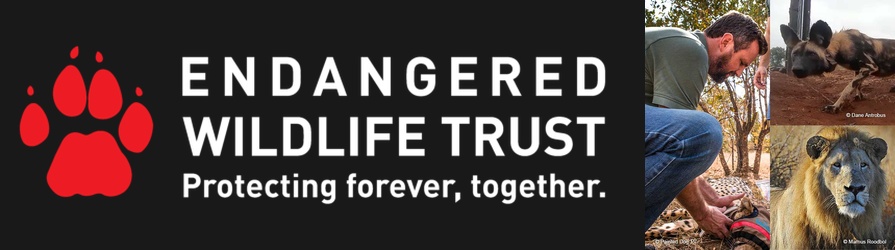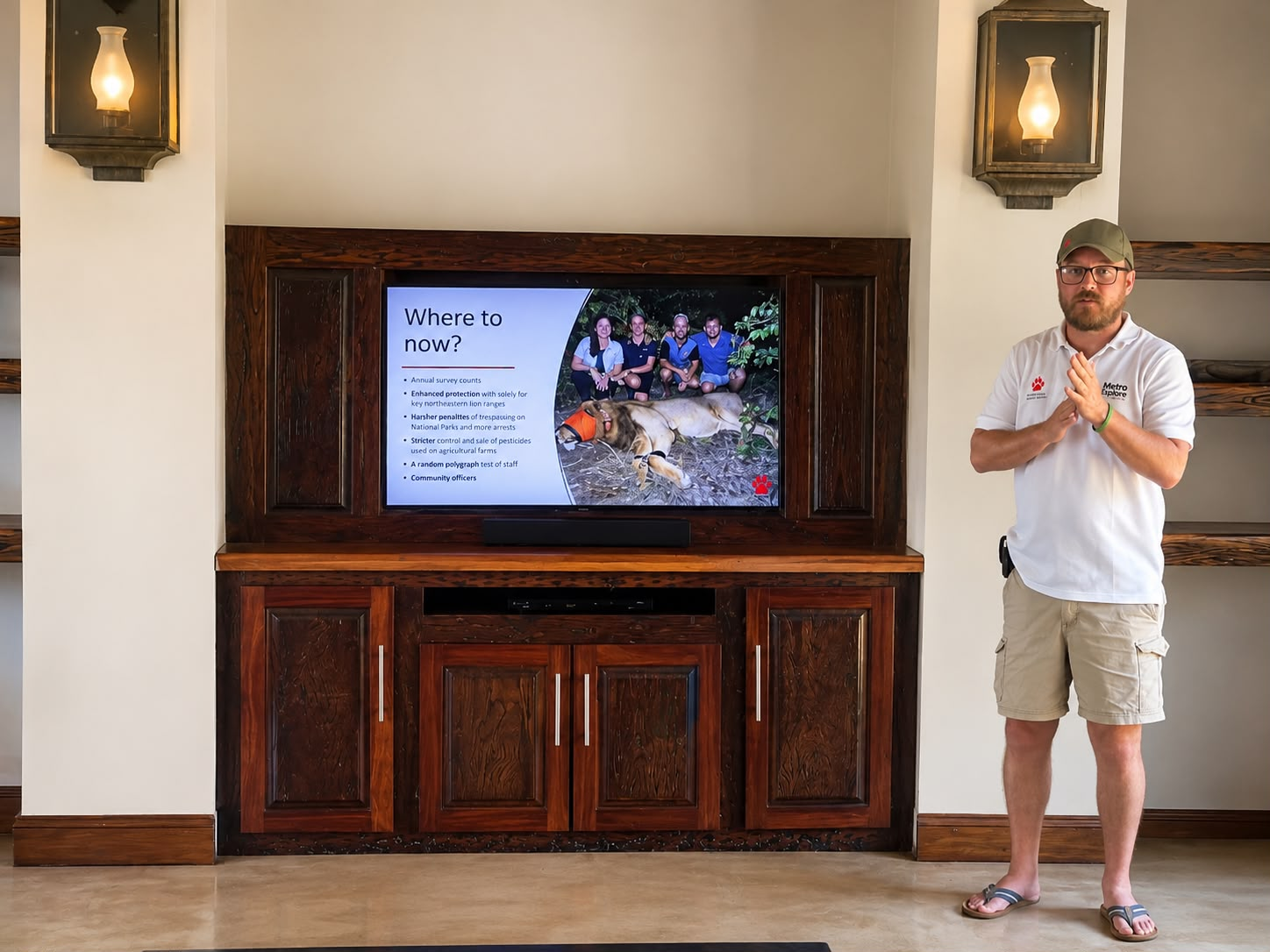
An afternoon with lion conservationist Marnus Roodbol from the Endangered Wildlife Trust revealed a rather different side of safari. And it’s one we think more people should experience.
By the BHS Team | November 2026
Approx. 6-minute read
The King of the Jungle Has a Problem
Here’s a question. When was the last time you went on safari and didn’t see a lion?
If you’ve spent time in the Greater Kruger, the chances are you’ve enjoyed some pretty spectacular sightings. Lions lounging in the shade, cubs tumbling over one another, perhaps even a pride on the hunt.
It’s easy to assume they’re doing just fine, but unfortunately, that’s not quite the case.
During our afternoon with Marnus, what started as a fascinating conservation presentation soon turned into a lively conversation, with plenty of questions about the challenges facing Africa’s lions.
By the end, we were looking at these familiar safari favourites a little differently, with a greater appreciation for the conservation work taking place behind the scenes.
Lions Are Disappearing, even in Places You’d Least Expect.
Let’s start with a statistic that caught us off guard.
According to the latest African Lion Database assessment, lions now occupy approximately 6% of their historical range.
Six percent.
The species is classified as Vulnerable on the IUCN Red List, with an estimated 22,000–25,000 adult and subadult lions remaining across Africa.
And while populations in some well-managed private reserves are stable or growing, the wider picture is considerably more worrying.

The Threats Facing Africa’s Lions
Marnus explained how habitat loss, conflict with livestock farmers, declining prey populations, snaring and deliberate poisoning are putting enormous pressure on wild lions.
Northern Kruger is a particularly concerning example.
It’s an area where Marnus and his colleagues have spent years monitoring lion populations, and where the threats are very real.
During our conversation, he described several recent lion deaths, including suspected poisoning and poaching incidents.
It was sobering stuff.
Especially when you consider that many safari guests visiting healthy lion populations elsewhere in Greater Kruger would never know any of this was happening.
How Do You Count a Lion? Start With Its Whiskers.
Gee Whiskers!
The Endangered Wildlife Trust (EWT) uses unique facial whisker spot patterns, comparable to human fingerprints, to identify and count individual lions during population surveys in areas like the Kruger National Park and Kgalagadi Transfrontier Park .
How It Works
- Unique Markings: The arrangement of whisker spots on both the left and right sides of a lion's face is unique to each individual and remains recognisable throughout its life.
- Field Photography: Researchers photograph both the left and right sides of each lion's face to record its whisker spot patterns.
- Spatial Capture-Recapture: These photographs are catalogued and analysed to identify individual lions, track their movements and estimate population numbers without invasive tagging.
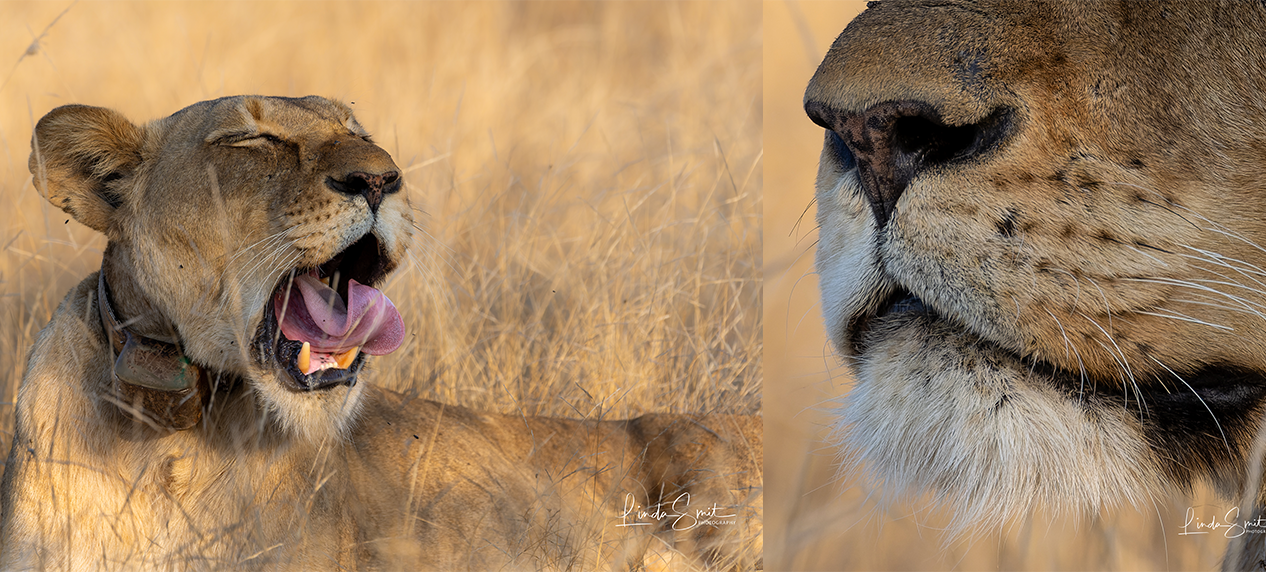
Identifying individual lions using their unique whisker spot patterns.
If you would like to see specific project updates or reports, you can visit the Endangered Wildlife Trust or check out their recent census breakdowns for the Kgalagadi Transfrontier Park.
How Researchers Track Individual Lions
And this is where Marnus’s work gets particularly interesting.
He and his team use a scientific technique called spatial capture-recapture to estimate lion populations.
In simple terms, researchers spend months driving through enormous areas of wilderness, photographing lions from both sides of their faces, recording where they’re seen and building individual identification records.
When the same lion is photographed again, it’s recorded as a recapture.
Combine these records with location data and statistical modelling, and scientists can estimate how many lions live in a particular area.
Sounds straightforward?
Try photographing the left and right whisker spots of 22 lions in one pride, while they’re sleeping, moving around and generally refusing to cooperate.
Marnus had us laughing as he recalled the logistical nightmare of identifying an entire pride from hundreds of photographs after leaving the sorting for two weeks.
There’s a lesson there somewhere.
In one northern Kruger survey, the team identified 52 individual lions using field observations and camera traps. Their modelling produced an estimate of approximately 110 lions in the study area.
An extraordinary amount of work for a result that can be expressed in a single sentence.
But these numbers matter. Without reliable population data, it’s incredibly difficult to understand where lions are declining, which areas need protection, and whether conservation interventions are working.
When a GPS Collar Stops Moving
Technology has become an essential part of lion conservation.
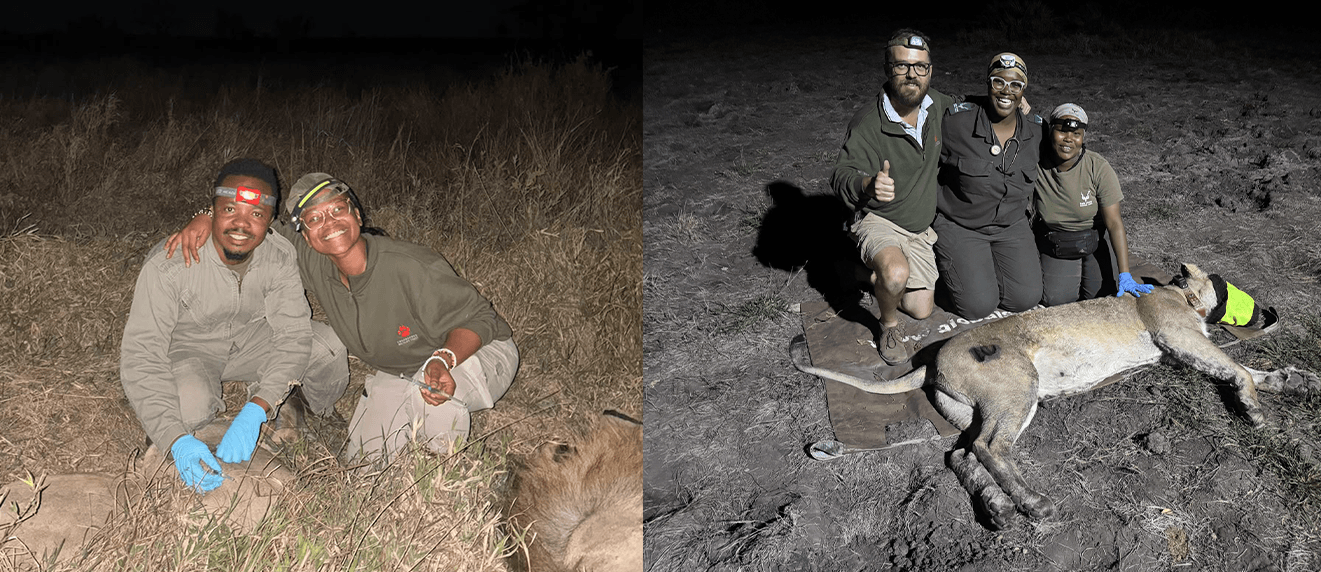
Marnus explained how GPS collars allow researchers to monitor lion movements and receive alerts when something unusual happens.
A lion that suddenly stops moving might simply be sleeping.
Or it might be in serious trouble.
Collars can transmit locations at set intervals, and a no-movement alert can prompt researchers to investigate.
The team also looks for unusual movement patterns that could suggest an animal is injured or caught in a snare.
But there’s a catch.
When a collar only sends an update every couple of hours, a lot can happen between signals.
And in the case of poaching, those hours can make all the difference.
The Wider Impact of Poisoning
Marnus shared some difficult firsthand accounts of lions being caught in snares or poisoned after returning to feed on carcasses.
He also explained the devastating knock-on effects of poisoning.
A single poisoned carcass can kill not only lions but also vultures and other scavengers. Vultures are especially vulnerable, and their disappearance creates further problems for an ecosystem that depends on them.
It was a stark reminder that conservation isn’t just about protecting one animal.
Everything is connected.
The People Problem. And Why It’s Complicated.
One of the most important parts of Marnus’s presentation was his explanation of human-wildlife conflict.
For communities living alongside protected areas, a lion isn’t necessarily an exciting safari sighting.
It can be a threat to livestock, livelihoods, and personal safety.
And when a family’s financial security depends on its cattle, it’s not difficult to understand why wildlife conservation isn’t always their priority.
Marnus spoke about the challenges faced by communities bordering Kruger and protected areas in Mozambique, where poverty, food insecurity and limited economic opportunities can contribute to illegal hunting.
This is where conservation becomes much more complicated than simply telling people not to kill lions.
Why Responsible Tourism Matters
Protecting wildlife also means finding ways for neighbouring communities to benefit from its survival.
It’s one of the reasons we believe responsible tourism matters.
A well-managed safari industry can support employment, conservation funding and local businesses. It isn’t the complete solution, but it has an important role to play.
What If Your Next Safari Came With a Conservationist?
This was the part of the afternoon that really got us thinking.
We’ve always believed the best safari experiences come down to the people you spend time with.
A brilliant guide can turn an ordinary sighting into an extraordinary one. They notice the details, understand the behaviour, and tell you things you won’t find in a field guide.
Now imagine spending time with someone whose working life is dedicated to understanding and protecting those animals.
Someone like Marnus.

Bringing Conservation Into Your Safari Experience
During our conversation, we discussed the possibility of creating specialist conservation experiences for BHS guests.
That might mean having a lion conservationist join you for an educational presentation at your lodge, sharing firsthand accounts from the field, explaining how lions are monitored and answering all those questions you’ve always wanted to ask.
For guests with a particular interest in conservation, there may also be opportunities to arrange a longer hosted experience with a specialist, subject to availability and the necessary permissions.
And where appropriate, a conservation contribution could support the organisation’s ongoing work.
This isn’t about promising guests they’ll get to collar a lion or participate in sensitive wildlife operations. Those activities are carefully managed and subject to strict protocols.
It’s about access to knowledge, conversations and people who can offer an entirely different perspective on the places we visit.
We think that’s pretty special.
A Different Kind of Lion Sighting
There’s a moment on almost every safari when you find yourself sitting quietly, watching a lion.
Perhaps it’s a big male stretched out beneath a tree. A lioness returning to her cubs. Or a pride disappearing into the grass as the light begins to fade.
It’s one of Africa’s great wildlife experiences.
But after spending an afternoon with Marnus, we’re reminded just how much is happening beyond that moment.
The researchers spending months in the field. The rangers responding to collar alerts. The conservationists working to protect habitats and reconnect populations.
And the enormous challenges they face.
We left with a greater appreciation for the people doing this work, and a renewed belief that the most memorable safaris aren’t always about what you see.
Sometimes they’re about what you learn.
And sometimes, the best thing you can take home from a safari is a completely different way of looking at the world.
For more insight into Marnus’s work, listen to our podcast conversation with him, where we explore the challenges of protecting Africa’s lions.
Interested in adding a conservation experience to your next safari?
We’d love to help you explore the possibilities. From specialist talks with conservationists to privately guided experiences that go beyond the usual game drive, we can connect you with people doing extraordinary work on the ground.
Talk to the BHS Team About a Conservation-Focused Safari
About the Endangered Wildlife Trust
The Endangered Wildlife Trust (EWT) is a South African conservation organisation working to protect threatened species and ecosystems. Its carnivore conservation work includes lion population surveys, monitoring, research and collaboration with conservation authorities.
To learn more about its work or support its conservation programmes, visit ewt.org.
This article draws on a presentation and discussion with Marnus Roodbol from the EWT, supplemented by published conservation research.