

.avif)
When most travellers think of the Republic of Congo, one remarkable animal immediately comes to mind: the western lowland gorilla. Tracking these critically endangered primates through the rainforests of Odzala-Kokoua National Park is one of Africa's most profound wildlife encounters, and rightly sits at the top of many travellers' wish lists.
Yet to think of the Congo Basin as simply a gorilla destination is to overlook one of the most biodiverse ecosystems on Earth. Stretching across six Central African countries, the Congo Basin is the world's second-largest tropical rainforest, home to forest elephants, elusive antelope, buffalo, countless primates, and more than 500 bird species. It is a place where every day in the forest reveals something different, and where the richness of the ecosystem becomes just as memorable as any single wildlife sighting.
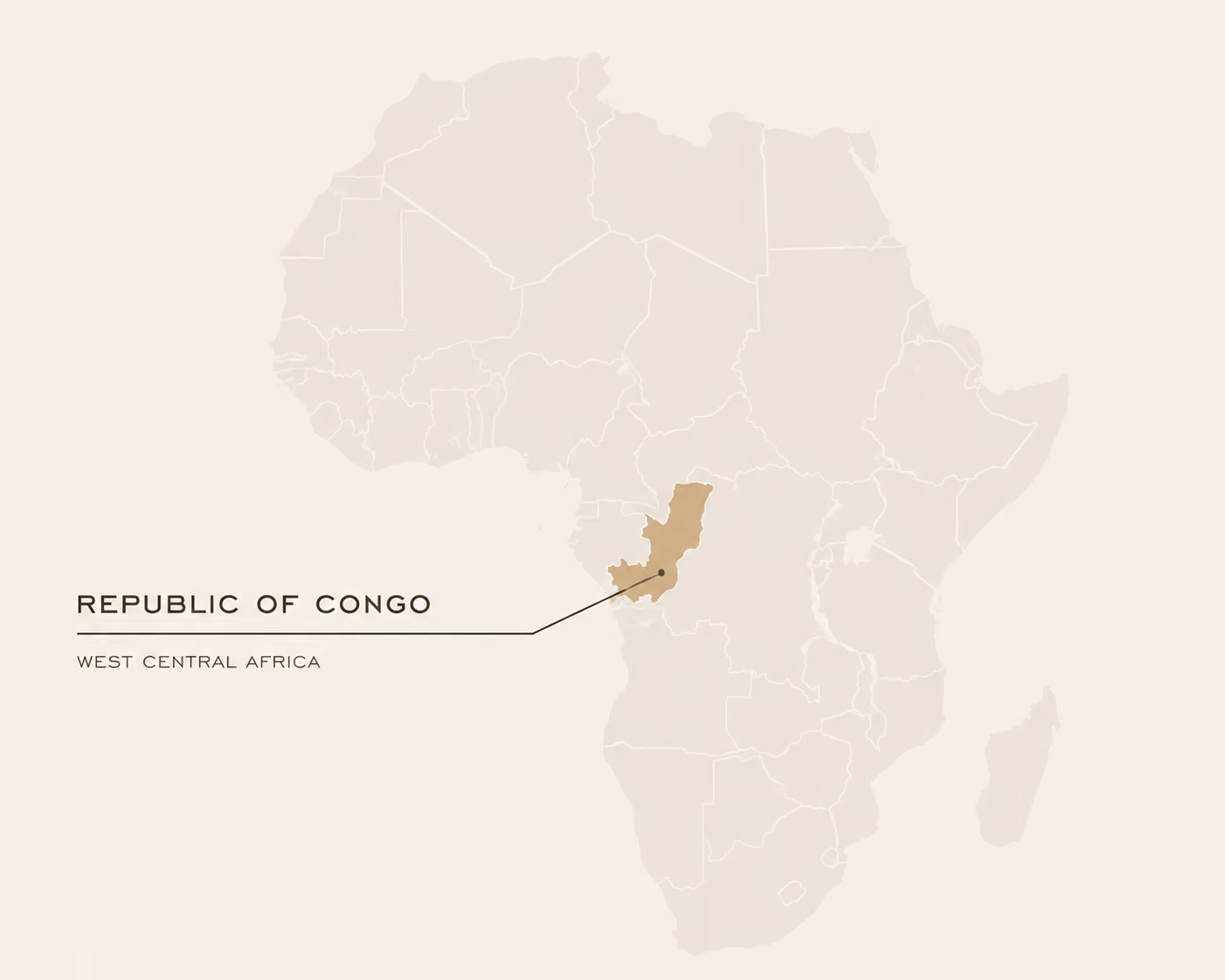
At a Glance: Congo Basin Wildlife
Location: Odzala-Kokoua National Park, Republic of Congo
Known For: Western lowland gorillas, forest elephants, forest buffalo, rare antelope, and exceptional birdlife
Best Wildlife Experiences: Gorilla trekking, rainforest walks, baï explorations, kayaking, and birdwatching
Best Time to Visit: June to September and December to February for the best trekking conditions
Why Visit the Congo Basin for Wildlife?
Wildlife viewing in the Congo Basin is unlike anywhere else in Africa. Instead of searching vast open plains from the back of a safari vehicle, you explore the rainforest on foot, by kayak, and along winding rivers. The forest is dense, visibility is limited, and animals reveal themselves slowly, often appearing without warning before disappearing back into the vegetation.
That slower pace changes the entire experience. Rather than moving quickly from one sighting to the next, you become immersed in the rhythms of the rainforest, listening to birds overhead, following fresh animal tracks, and learning to notice the small details that make this ecosystem so remarkable. Every encounter feels earned, making even the briefest wildlife sightings incredibly rewarding.
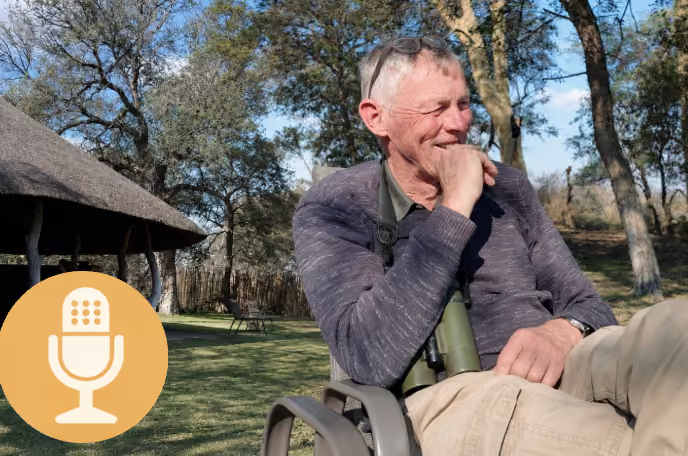
"What I love about the Congo Basin is that every wildlife encounter feels earned. You're not driving from sighting to sighting. You're immersed in the rainforest, moving at its pace, and when something reveals itself, it feels incredibly special." - Jo Cooper, BHS Safari Guide
.avif)
Western Lowland Gorillas in the Congo Basin
The western lowland gorilla remains the Congo Basin's most celebrated wildlife encounter. Smaller and more agile than their mountain gorilla relatives, these critically endangered primates are perfectly adapted to life in the rainforest, spending more time in the trees and moving effortlessly through dense vegetation.
At Ngaga Camp in Odzala-Kokoua National Park, guests track habituated gorilla families alongside expert local trackers and researchers whose years of experience provide fascinating insight into their behaviour and family dynamics. Watching a silverback quietly observe his family while juveniles play nearby is an experience that stays with travellers long after they leave the forest.
Read more in our guide to Gorilla Trekking in the Congo Basin.
.avif)
Forest Elephants: The Hidden Giants of the Congo Basin
While gorillas may be the headline attraction, forest elephants are often the wildlife encounter that surprises people most. Unlike their larger savannah relatives, forest elephants are recognised as a distinct species, smaller in stature with straighter tusks that help them move through dense rainforest.
Many of the best sightings take place around Odzala's famous forest baïs, natural mineral-rich clearings where elephants emerge silently from the trees to feed alongside buffalo, antelope, and countless bird species. Seeing one appear almost without sound from the rainforest is unlike any elephant encounter elsewhere in Africa.
.avif)
Forest Buffalo and Rare Antelope of the Congo Basin
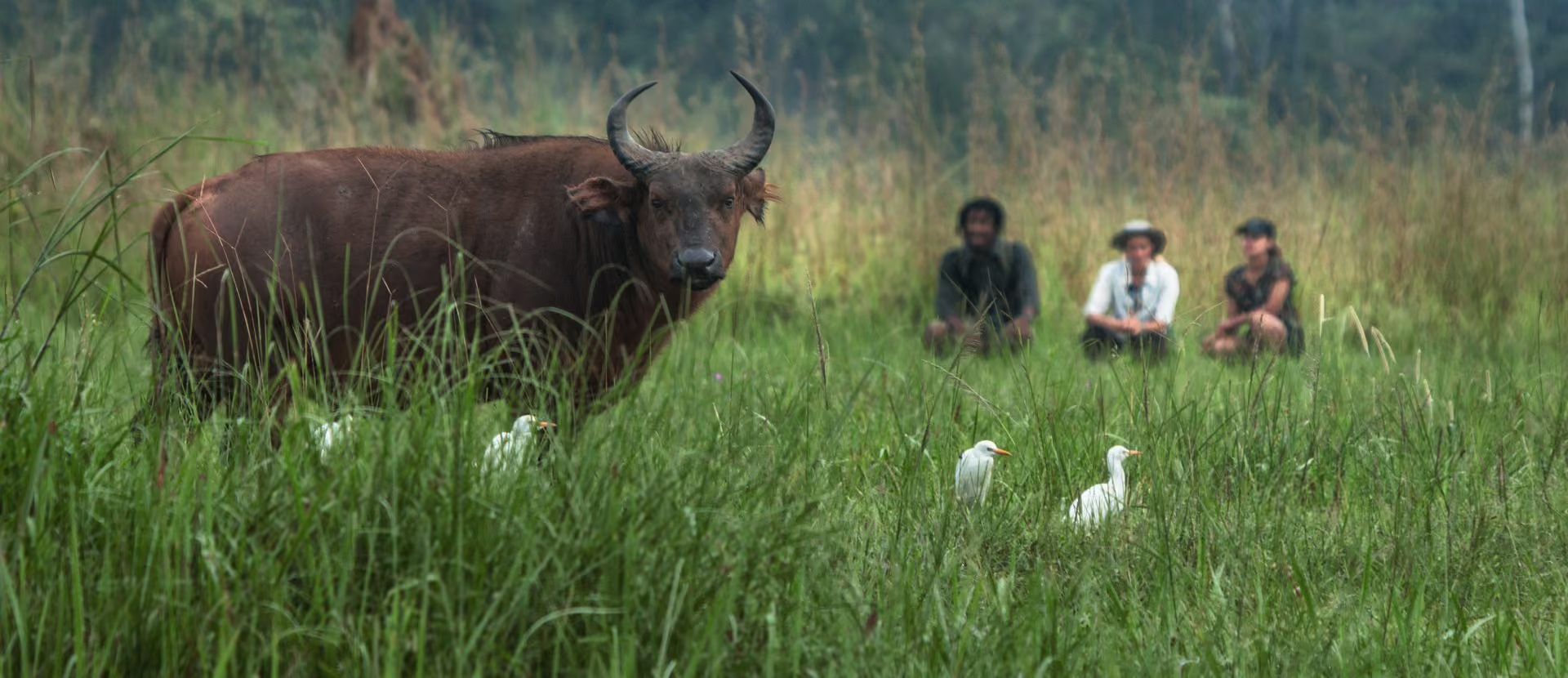
The Congo Basin is also home to several species that even experienced safari travellers may never have encountered. Forest buffalo, smaller and more reddish-brown than Cape buffalo, move quietly through wetlands and forest clearings, while sitatunga navigate swamp forests with remarkable ease thanks to their long, splayed hooves.
For many wildlife enthusiasts, there is always the hope of spotting the elusive bongo. Widely regarded as one of Africa's most beautiful antelope, its rich chestnut coat and striking white stripes make it one of the rainforest's most sought-after sightings.
Birdlife and Primates of the Congo Basin
The rainforest canopy is alive with movement. More than 500 bird species have been recorded across the wider Congo Basin, making it one of Africa's most rewarding birdwatching destinations. African grey parrots, hornbills, kingfishers, turacos, and countless rainforest specialists fill the forest with sound from dawn until dusk.
Beyond the gorillas, the Congo Basin also supports an impressive diversity of primates, including mangabeys, guenons, colobus monkeys, and several other forest-dwelling species. Together they create an ever-changing backdrop to every walk, paddle, and wildlife encounter.
.avif)
What Makes Congo Basin Wildlife So Unique?
The Congo Basin is not defined by the number of species you see, but by the way you experience them. One of the defining features of Odzala-Kokoua National Park is its network of forest baïs (pronounced "bye"), natural mineral-rich clearings hidden within the rainforest where wildlife gathers to feed on essential salts and minerals. These open spaces provide rare opportunities to observe forest elephants, buffalo, birds, and other elusive species that are seldom seen beneath the dense canopy.
Whether you are following fresh gorilla tracks through the forest, drifting quietly along the Lekoli River, or watching elephants emerge into a baï at first light, the experience is one of patience, immersion, and discovery. It is this connection to the rainforest that makes the Congo Basin feel so different from anywhere else in Africa.
Exploring the Congo Basin
Our journeys through the Republic of Congo are designed to showcase the remarkable diversity of the rainforest rather than focusing on a single species. Moving between Ngaga, Lango, and Mboko Camps allows guests to experience different habitats, landscapes, and wildlife encounters, from gorilla trekking and baï explorations to kayaking, birdwatching, and guided rainforest walks.
Our journeys through the Republic of Congo are designed to showcase the remarkable diversity of the rainforest rather than focusing on a single species. Moving between Ngaga, Lango and Mboko Camps allows guests to experience different habitats, landscapes and wildlife encounters, from gorilla trekking and baï explorations to kayaking, birdwatching and guided rainforest walks. If you are beginning to map out the practical details, our guide to planning a trip to the Republic of Congo covers when to go, how to get there and what to expect.
.jpg)
Plan Your Congo Journey
The Congo Basin is one of the last places on Earth where wildlife still moves largely unseen through vast, ancient rainforest. From western lowland gorillas and forest elephants to rare antelope, primates, and remarkable birdlife, every day reveals another side of this extraordinary ecosystem.
At BHS Safaris, we create bespoke journeys that showcase the full diversity of the Republic of Congo while ensuring a seamless experience from Brazzaville to the heart of Odzala-Kokoua National Park. Explore our Republic of Congo destination guide, discover our Congo Basin Expedition, or get in touch with our team at hello@bhs-safari.co to begin planning your journey.
FAQS
The Congo Basin is home to western lowland gorillas, forest elephants, forest buffalo, sitatunga, bongos, crocodiles, hippos, many primate species, and more than 500 bird species. In Odzala-Kokoua National Park, wildlife viewing is especially rewarding because species are encountered through rainforest walks, baï explorations, kayaking, and river journeys.
No. Western lowland gorillas are one of the Congo Basin’s most famous wildlife encounters, but the rainforest offers far more than gorilla trekking. Travellers may also see forest elephants, forest buffalo, rare antelope, monkeys, colourful birdlife, and wildlife gathering in mineral-rich forest clearings known as baïs.
Odzala-Kokoua National Park is one of the best places to see wildlife in the Republic of Congo. The park protects vast areas of the Congo Basin rainforest and offers access to gorilla trekking, forest elephant sightings, birdwatching, guided walks, kayaking, river safaris, and baï-based wildlife viewing.
A forest baï is a natural mineral-rich clearing in the rainforest where animals gather to feed on salts and minerals. In the Congo Basin, baïs offer some of the best opportunities to see forest elephants, forest buffalo, antelope, birds, and other elusive rainforest species that are often difficult to spot beneath the dense canopy.
Yes. Forest elephants are one of the most remarkable species to see in the Congo Basin, particularly around the baïs and wetlands of Odzala-Kokoua National Park. Smaller than savannah elephants and adapted to dense rainforest, they often appear quietly from the trees, making each sighting feel especially memorable.
Wildlife viewing in the Congo Basin is slower and more immersive than a traditional vehicle-based safari. Instead of crossing open plains in search of the Big Five, travellers explore by foot, kayak, and boat, learning to read tracks, listen to forest sounds, and appreciate brief but powerful encounters with rainforest species.